Buying guideGift guides
Choosing a board game gift for families, friends and game nights
 By Natasha Weston · Published · Updated
How we choose products and write our guides
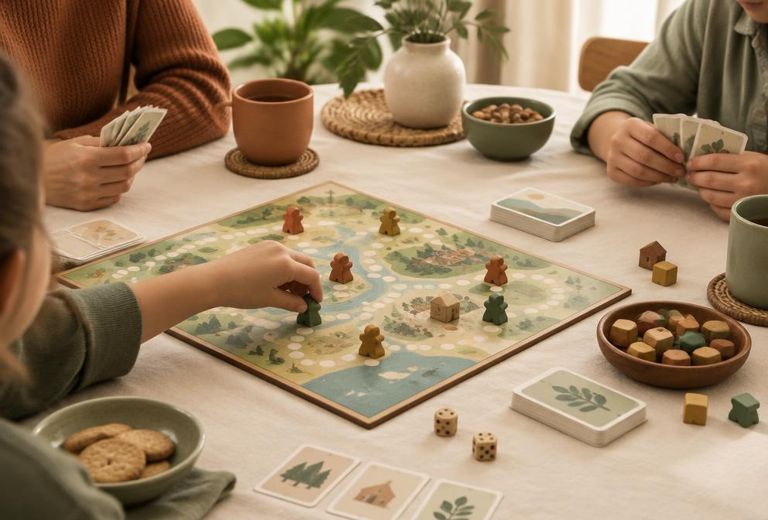
Player count, difficulty and playing time all matter. Discover how to choose board games that suit the people who'll actually play them.
Board games can make some of the best gifts, particularly when they bring people together. Whether it's a quick card game after dinner, a competitive family favourite or a challenging escape room puzzle, a well-chosen game can provide hours of entertainment.
But not every board game suits every household.
Some games take just ten minutes to learn, while others involve complicated rules, lengthy sessions and plenty of strategic thinking. A game that one family absolutely loves might leave another frustrated before they've even finished reading the instructions.
The secret to choosing a good board game gift is understanding who will play it, how they like to play and how much of a challenge they'll enjoy.
Here's what to consider before buying.
Start With Who Will Be Playing
Before choosing a game, think about the people who are most likely to play it.
Are you buying for a couple, a family with young children, teenagers or a group of adults?
Different games work better for different groups.
Board Games for Families With Young Children
Younger children often enjoy games with straightforward rules, colourful pieces and relatively short playing times.
Look for:
- Simple instructions.
- Age-appropriate challenges.
- Short rounds that maintain interest.
- Durable pieces.
- Opportunities for everyone to participate.
- A manageable amount of reading.
Games involving matching, memory, observation or simple decisions can work well.
Remember that the age recommendation on the box is a guide, not a guarantee that every child of that age will enjoy the game.
Board Games for Teenagers
Teenagers may enjoy games that offer more independence, competition or strategic thinking.
Depending on their interests, consider:
- Fast-paced party games.
- Deduction and mystery games.
- Strategy games.
- Cooperative challenges.
- Escape room games.
- Games with humour or creative thinking.
If you're buying for a teenager, consider whether they'll play with friends, siblings or the wider family.
A game designed for large groups may not get much use in a household where only two people usually play.
Board Games for Adults
Adult board games cover an enormous range, from relaxed social games to complex strategy titles.
Some people enjoy competitive games where everyone is trying to win. Others prefer cooperative games where players work together towards a shared objective.
Think about the recipient's personality.
Someone who loves solving puzzles might enjoy a deduction game, while a person who enjoys entertaining friends may prefer something quick and sociable.
Check the Number of Players
One of the easiest mistakes when buying a board game is overlooking the player count.
A game might look perfect, but if it requires four players and the recipient usually plays with just one other person, it may rarely leave the cupboard.
Before buying, check:
- Minimum players: Can the game be played with two people?
- Maximum players: Will it accommodate the usual group?
- Best player count: Does it work equally well with different numbers of players?
- Solo play: Can someone enjoy it independently?
- Team play: Can larger groups divide into teams?
Some games technically support two players but are much more enjoyable with four or five.
Reviews from people who have played with different group sizes can be particularly helpful.
How Long Does the Game Take?
Playing time is another important consideration.
Not everyone wants to spend three hours learning and playing a game.
Quick Games: Under 30 Minutes
Short games can be ideal for families, parties and casual players.
They're particularly useful when people want something entertaining without a major time commitment.
Medium-Length Games: 30–60 Minutes
These can offer more depth while remaining manageable for an evening.
Many family strategy and cooperative games fall into this category.
Longer Games: Over an Hour
Longer games may suit enthusiasts who enjoy detailed rules, strategic decisions and extended playing sessions.
However, a lengthy game isn't necessarily a better gift.
A 20-minute game that gets played every weekend may be more appreciated than an elaborate game that never makes it out of the box.
Also remember that advertised playing times don't always include learning the rules or setting up the game.
Competitive or Cooperative: Which Is Better?
This is one of the most useful distinctions when choosing a game.
Competitive Board Games
In competitive games, players or teams compete to win.
These can be great for people who enjoy:
- Strategic decisions.
- Friendly rivalry.
- Scoring points.
- Negotiation or bluffing.
- Testing their knowledge or skills.
However, highly competitive games may not suit every family.
If younger children regularly play with adults, consider whether the game offers a reasonably balanced experience.
Cooperative Board Games
In cooperative games, players work together towards a shared goal.
These can be particularly enjoyable for families because everyone contributes ideas and decisions.
Cooperative games may involve:
- Solving a mystery.
- Escaping a fictional location.
- Completing a mission.
- Overcoming challenges.
- Working together against the game itself.
They're a good option for people who enjoy teamwork and problem-solving rather than direct competition.
One thing to watch for is a more experienced player taking over every decision. The best experience is one where everyone gets a chance to contribute.
Escape Room Games: A Different Kind of Gift
Escape room games have become a popular option for people who enjoy puzzles, mysteries and logical thinking.
Rather than simply moving pieces around a board, players work through clues and challenges to solve a larger problem.
These games can be especially enjoyable for families with older children and teenagers because everyone can contribute different ideas.
How Difficult Are Escape Room Games?
Difficulty varies considerably.
Some games are designed for beginners, while others require much more lateral thinking and patience.
Check:
- The stated difficulty level.
- Recommended age.
- Number of players.
- Estimated playing time.
- Whether hints are available.
- Whether the game can be played more than once.
For someone new to escape room games, I'd generally start with an easier difficulty level rather than choosing the most challenging option.
A difficult game can be rewarding, but it can also become frustrating if the players aren't familiar with how the puzzles work.
Are Escape Room Games Reusable?
Not always.
Some escape room games require players to write on materials, fold cards, cut out pieces or otherwise alter the contents to solve the puzzles.
That means they may only be suitable for one playthrough.
Others are designed to be reset or passed on.
Check whether the game is reusable before buying, particularly if the recipient enjoys sharing games with friends or family.
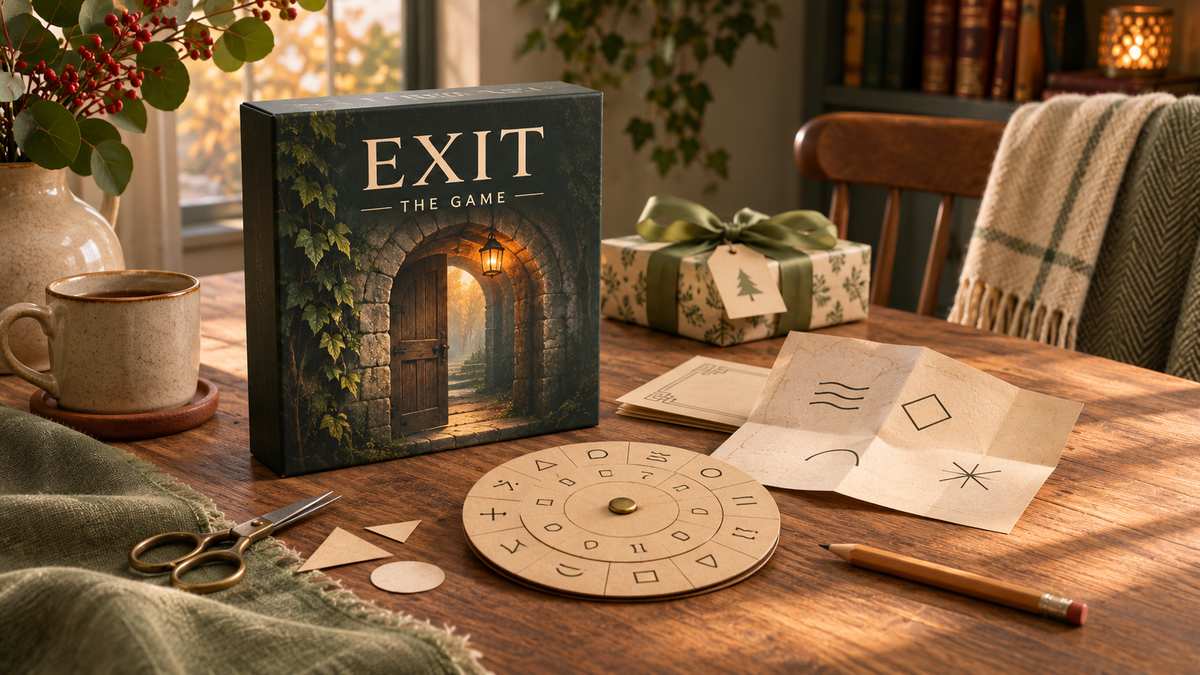
If you're considering an EXIT game, read our first-hand experience of playing EXIT Games as a family for a closer look at the teamwork, difficulty levels and problem-solving involved.
Strategy Games: Great for People Who Love a Challenge
Strategy games can make excellent gifts for people who enjoy planning, decision-making and thinking several moves ahead.
However, strategy games vary enormously in complexity.
Light Strategy Games
These generally have relatively accessible rules and shorter playing times.
They may be suitable for families or people who are beginning to explore modern board games.
Medium Strategy Games
These often involve more decisions, different ways to win and greater interaction between players.
They can be a good choice for someone who already enjoys board games.
Complex Strategy Games
More advanced games may involve lengthy rulebooks, multiple systems and playing sessions lasting several hours.
These can be fantastic gifts for dedicated enthusiasts, but they're risky choices for someone who rarely plays.
Don't assume that someone who enjoys traditional board games will automatically enjoy a complex modern strategy game.
Party Games: Ideal for Larger Groups
Party games are designed to encourage interaction and often work best with several players.
They can be particularly suitable for:
- Christmas gatherings.
- Family celebrations.
- Birthday parties.
- Groups of friends.
- Casual game nights.
Popular formats include trivia, word games, drawing challenges, deduction and creative storytelling.
When choosing a party game, consider whether the group enjoys performing, answering questions or making quick decisions.
Some people love games involving acting or drawing, while others find those activities uncomfortable.
Also check the content and age rating. Games marketed towards adults may include humour or topics unsuitable for younger players.
What Makes a Good Board Game for Christmas?
Christmas is a particularly good time to give board games because families and friends often have opportunities to play together.
However, the best Christmas games aren't necessarily Christmas-themed.
I'd look for something that can be enjoyed throughout the year.
A good family Christmas game should ideally:
- Accommodate the people likely to play.
- Have rules that are reasonably easy to explain.
- Suit the age range of the group.
- Keep everyone involved.
- Offer an enjoyable playing time.
- Be something people will want to play again.
If you're buying for a family with teenagers and adults, a cooperative mystery or strategy game may be more engaging than a simple children's game.
For younger families, shorter games with accessible rules may be more successful.
How Much Should You Spend on a Board Game Gift?
Board games are available at a wide range of prices, and some of the most enjoyable games are relatively inexpensive.
Under £15
Look for compact card games, travel games, simple family games and smaller puzzle challenges.
£15–£30
This range may include a wide selection of family board games, party games and escape room experiences.
£30–£60
Consider more substantial strategy games, cooperative games and titles with larger components or more detailed gameplay.
Over £60
Premium board games, collector editions and complex strategy titles may suit dedicated enthusiasts.
These are indicative price ranges rather than guaranteed current prices.
The best value comes from how much enjoyment the game provides, not how impressive the box looks.
Seven Mistakes to Avoid When Buying Board Games as Gifts
- Ignoring the player count: Make sure the recipient has enough people to play.
- Choosing a game that's too complicated: Consider the group's experience and patience.
- Overlooking playing time: Not everyone wants a two-hour game.
- Buying something they already own: Popular titles are particularly easy to duplicate.
- Ignoring age suitability: Check the recommended age and content.
- Assuming every game is reusable: Some escape room and mystery games are designed for one playthrough.
- Choosing based only on popularity: A bestselling game may not suit the recipient's interests.
If you're unsure, find out which games they've enjoyed previously.
That can reveal whether they prefer strategy, teamwork, trivia, puzzles or something more relaxed.
What If They Already Have Lots of Board Games?
Buying for a board game enthusiast can be difficult because they may already own many popular titles.
Rather than choosing a random bestseller, consider:
- An expansion for a game they already enjoy.
- A smaller travel version of a favourite game.
- A game from a designer or publisher they like.
- A cooperative game if they usually play competitive titles.
- A new type of puzzle or mystery experience.
- Accessories that help organise or protect their games.
Check compatibility before buying expansions, as they often require the original game.
If you're looking for something beyond traditional board games, Givumi's craft sets and LEGO gift ideas may appeal to people who enjoy hands-on activities and problem-solving.
How to Read a Board Game Box
Most boxes show three key details. Use them together:
- Player count: check the minimum as well as the maximum. Some games are much better at certain player counts than others.
- Minimum age: the publisher's age guidance reflects rules complexity and small parts, not just the theme.
- Playing time: the stated time often assumes players already know the rules. First games usually take longer.
Language Dependence
Some games rely on reading cards or giving word clues, which can be harder for younger children, people reading in a second language or mixed-age groups. Picture-based and symbol-based games can be easier for those groups.
Replayability
A game with variable set-ups, lots of cards or different strategies tends to stay interesting. Single-story games, such as many escape-room games, are often played once.
Expansions or Standalone Games?
An expansion adds to a game they already own and can't be played on its own. Only buy one if you know they have the base game - and the right edition. A standalone game is complete in the box. Some ranges also include spin-off versions, such as smaller travel or city editions, which are complete games in their own right.
Gift Ideas Worth Considering
Links marked "Ad" are paid affiliate links. Givumi earns commission from qualifying purchases.
These are complete, standalone games rather than expansions. Check player count, age guidance and playing time on the retailer page or the publisher's website.
For puzzle-led games, read our first-hand EXIT games review and our brain teasers gift guide. For video games, see our gamers gift guide.
Remember Their Favourite Games With Givumi
Board games are one of those gift categories where knowing the recipient's interests makes a huge difference.
Someone might mention a game they'd love to try, a particular type of puzzle they enjoy or a new expansion they've been considering.
But those details are easily forgotten.
With Givumi, you can create a gift profile for someone and record their interests, preferences and gift ideas throughout the year.
For a board game enthusiast, you might keep track of:
- Their favourite types of games.
- Games they already own.
- Titles they've mentioned wanting.
- Whether they prefer competitive or cooperative play.
- Their preferred difficulty level.
- The number of people they usually play with.
That makes future birthdays and Christmases easier to plan, particularly when you're buying for someone who already has a substantial collection.
Final Thoughts: Choose a Game They'll Want to Play Again
Board games can make wonderful gifts because they offer something beyond the present itself: time spent together, shared experiences and plenty of opportunities for laughter and problem-solving.
But choosing the right game requires a little thought.
Before buying, remember to:
- Consider who will be playing.
- Check the recommended player count.
- Think about playing time and complexity.
- Decide whether competitive or cooperative games are more suitable.
- Check age recommendations and content.
- Avoid buying something the recipient already owns.
Whether you're choosing a simple family game, a challenging strategy title or an escape room puzzle, the best board game gift is one that suits the people who'll actually be playing it.
Looking for more inspiration? Explore LEGO gifts, browse craft sets, or discover personalised gift ideas with Givumi.
Keep reading