First-hand experienceFirst-hand experience
Why EXIT games have become a family favourite in our house
 By Natasha Weston · Published · Updated
How we choose products and write our guides
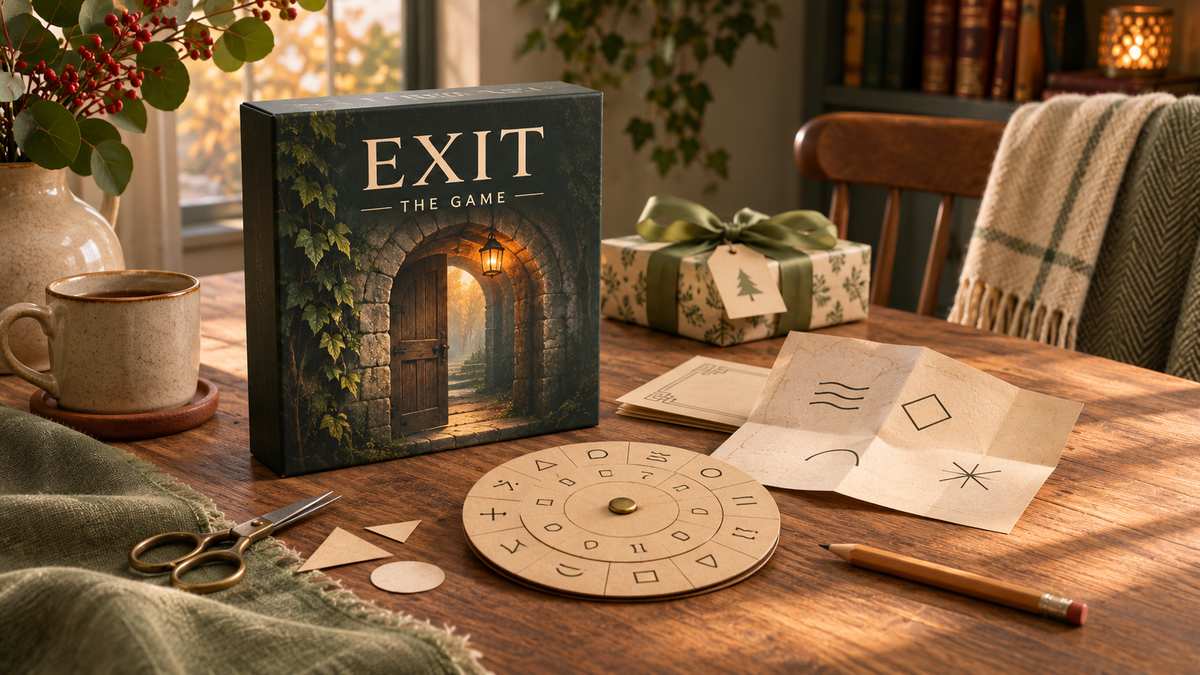
Our family of six has tackled EXIT games at different difficulty levels. Discover what makes them fun, challenging and worth gifting.
There are six of us in our family: four children spanning older childhood, the teenage years and adulthood, plus us parents. Finding something we can all get stuck into together isn't always straightforward.
EXIT games have become a firm favourite.
They take a little getting into. There's usually a moment at the beginning when we're looking at the materials, reading the instructions and wondering where to start. Then someone spots something, an idea gets suggested, and suddenly everyone is involved.
Sometimes it's logic. Sometimes it's noticing a detail the rest of us have overlooked. Occasionally, even the box deserves a closer look.
I won't give away any solutions. Discovering how to approach the puzzles is part of the fun.
If you already know the format, you can browse the EXIT games currently listed on Givumi. Otherwise, here is what our family has learned from playing them.
What are EXIT games?
EXIT: The Game is a series of escape-room-style games you play at home. Each box gives you a story and a collection of puzzles to work through together. You investigate the materials, solve riddles and crack codes to move towards the ending.
The exact contents vary by title. The classic games typically use a booklet, cards and a decoder disc, with instructions and a help system to guide you when you get stuck. You don't need to arrive knowing how to solve everything - that's what you're there to work out.
What makes them different from a conventional board game is the way you have to think about what's in front of you. Reading something carefully can matter just as much as spotting a pattern.
Everyone gets a chance to have the idea
The best part for me is watching the children get properly absorbed in solving something.
Someone suggests an answer. Someone else notices why it might not work. Another person looks at the same information differently and suddenly we have something worth trying.
Everyone has a valid idea to contribute, even when it doesn't lead straight to the solution. An unsuccessful suggestion can still help us rule something out or notice what we've missed.
And when an idea does work, there's a real sense of achievement.
That applies to us adults too. It's very satisfying when your suggestion turns out to be the one that moves everyone forward - particularly after you've all been staring at the same puzzle for a while.
For our family, that shared problem-solving is the attraction. We're working towards the same answer rather than trying to beat each other.
Difficulty matters more than you might expect
We've found a noticeable difference between the difficulty levels. This is how the levels we've tried felt for our household:
- Level 1: A breeze for us, although an easier game can still be enjoyable.
- Level 2: A little taxing, with enough thinking and teamwork to keep us occupied.
- Level 4: Stopped all of us in our tracks. Having several brains around the table didn't mean we could breeze through it.
That's our experience, rather than a promise about how another family will find them.
If you're buying your first EXIT game, I would resist choosing the hardest one simply because the recipients enjoy puzzles. Getting used to the format is part of the challenge.
Read the difficulty rating on the exact box. For context, the publisher lists both The Sunken Treasure and The Mysterious Museum at 2 out of 5, while Dead Man on the Orient Express is rated 4 out of 5.
EXIT Games Difficulty Levels: Which One Should You Choose?
I would start with the difficulty before choosing the story. The comparison below brings together publisher difficulty levels, not customer ratings. The buying suggestions are guidance, not a list of games our family has personally played.
Links marked 'Ad' are paid affiliate links. Givumi earns commission from qualifying purchases. Read our affiliate disclosure.
| Game | Difficulty | Best for | Find this game |
|---|---|---|---|
| The House of Riddles | 2/5 | Beginners | Not currently listed |
| The Sunken Treasure | 2/5 | Beginners | |
| The Mysterious Museum | 2/5 | Beginners | Not currently listed |
| The Enchanted Forest | 2/5 | Beginners | |
| The Haunted Roller Coaster | 2/5 | Beginners | Not currently listed |
| The Stormy Flight | 2/5 | Beginners | Not currently listed |
| The Abandoned Cabin | 2.5/5 | Beginners ready for a challenge | |
| The Forgotten Island | 3/5 | Some experience | Not currently listed |
| The Polar Station | 3/5 | Some experience | Not currently listed |
| The Sinister Mansion | 3/5 | Some experience | Not currently listed |
| Theft on the Mississippi | 3/5 | Some experience | |
| The Sacred Temple | 3/5 | Some experience; jigsaw edition | Not currently listed |
| The Secret Lab | 3.5/5 | Confident puzzle solvers | Not currently listed |
| Dead Man on the Orient Express | 4/5 | Experienced players | |
| The Pharaoh's Tomb | 4/5 | Experienced players | |
| The Forbidden Castle | 4/5 | Experienced players | Not currently listed |
| The Deserted Lighthouse | 4/5 | Experienced players; jigsaw edition | Not currently listed |
| The Catacombs of Horror | 4.5/5 | Expert players; two-part experience | Not currently listed |
The House of Riddles
- Difficulty
- 2/5
- Best for
- Beginners
- Find this game
- Not currently listed
The Sunken Treasure
- Difficulty
- 2/5
- Best for
- Beginners
The Mysterious Museum
- Difficulty
- 2/5
- Best for
- Beginners
- Find this game
- Not currently listed
The Enchanted Forest
- Difficulty
- 2/5
- Best for
- Beginners
The Haunted Roller Coaster
- Difficulty
- 2/5
- Best for
- Beginners
- Find this game
- Not currently listed
The Stormy Flight
- Difficulty
- 2/5
- Best for
- Beginners
- Find this game
- Not currently listed
The Abandoned Cabin
- Difficulty
- 2.5/5
- Best for
- Beginners ready for a challenge
The Forgotten Island
- Difficulty
- 3/5
- Best for
- Some experience
- Find this game
- Not currently listed
The Polar Station
- Difficulty
- 3/5
- Best for
- Some experience
- Find this game
- Not currently listed
The Sinister Mansion
- Difficulty
- 3/5
- Best for
- Some experience
- Find this game
- Not currently listed
Theft on the Mississippi
- Difficulty
- 3/5
- Best for
- Some experience
The Sacred Temple
- Difficulty
- 3/5
- Best for
- Some experience; jigsaw edition
- Find this game
- Not currently listed
The Secret Lab
- Difficulty
- 3.5/5
- Best for
- Confident puzzle solvers
- Find this game
- Not currently listed
Dead Man on the Orient Express
- Difficulty
- 4/5
- Best for
- Experienced players
The Pharaoh's Tomb
- Difficulty
- 4/5
- Best for
- Experienced players
The Forbidden Castle
- Difficulty
- 4/5
- Best for
- Experienced players
- Find this game
- Not currently listed
The Deserted Lighthouse
- Difficulty
- 4/5
- Best for
- Experienced players; jigsaw edition
- Find this game
- Not currently listed
The Catacombs of Horror
- Difficulty
- 4.5/5
- Best for
- Expert players; two-part experience
- Find this game
- Not currently listed
Check the rating on the exact edition before buying. The Sacred Temple and The Deserted Lighthouse are jigsaw editions; The Catacombs of Horror is a two-part experience. A similar title does not necessarily mean the same game. Check current prices, availability and delivery with the retailer.
Which EXIT Game Should You Give as a Gift?
Best EXIT Games for Beginners
For a first box, I would choose a 2/5 game with a story the recipient likes. The Sunken Treasure and The Enchanted Forest are starting points from the comparison above. An appealing setting gives them a reason to get involved without making the hardest possible puzzle the gift's main attraction.
The Abandoned Cabin is rated 2.5/5, so I would treat it as a step up rather than the easiest introduction. Even keen puzzle solvers need time to learn how EXIT games use the materials in front of them.
Best EXIT Games for Family Game Nights
For our household, the pleasure is everyone contributing an idea. That is why I would choose a difficulty that leaves room for the whole group to take part, rather than picking a box only the most experienced person will enjoy.
Start with 2/5 if the family is new to EXIT, then consider 3/5 once they know the format. Ask who will actually be playing and check the exact box's age guidance and player count. Our experience as a family of six should not be taken to mean every title is designed for six players.
Best EXIT Games for Experienced Puzzle Solvers
For someone already comfortable with the format, the 4/5 titles include Dead Man on the Orient Express, The Pharaoh's Tomb and The Forbidden Castle. I would check what they have played before choosing: a new story matters when knowing the solutions changes the experience.
Our level-four game stopped all of us in our tracks, so I would not assume a higher rating automatically makes a better present. The Catacombs of Horror, at 4.5/5, is a two-part choice for someone who actively wants a demanding challenge and can make time for it.
What to Check Before Buying an EXIT Game
- The complete title and edition: check for Kids, jigsaw or advent-calendar wording, and make sure a sequel is the one you intend to buy.
- Whether they have already played it: ask them or someone who knows their collection, without revealing puzzle solutions.
- The difficulty, ages and player count: use the exact box, not another game in the series.
- The one-time-use format: classic EXIT games involve altering materials; check that this suits the recipient.
- Time and practical setup: check the listed playing time and required equipment so they can settle into the game rather than rush it.
- The current listing: confirm price, stock and delivery with the retailer before ordering.
Using a clue doesn't spoil the evening
You have instructions and help available, and I think it's worth remembering that you're playing to enjoy yourselves.
There's a difference between spending time thinking through a satisfying puzzle and becoming so stuck that everyone loses interest. The help system gives you somewhere to turn when you need another nudge.
The publisher's instructions explicitly encourage using help cards when you're stuck. You also won't necessarily have all the information needed for every puzzle immediately, so patience matters.
My advice is to let everyone put their ideas forward before reaching for help, but don't make avoiding clues more important than enjoying the game.
You cut things up - and that's part of it
This is an important detail if you're buying an EXIT game as a present: the classic games are designed as one-time experiences.
You may need to write on, fold, tear or cut the materials to solve the puzzles. They aren't games you simply pack away untouched and play again with a different group. The publisher makes this clear in its product descriptions and instructions.
That won't suit everyone. If the person you're buying for wants a game they can replay regularly or pass on afterwards, check the particular edition carefully before choosing.
For us, the appeal is the experience we have together. Once we know the answers, we're ready for a different story anyway.
Different EXIT storylines to explore
There are plenty of settings to choose from, so you can consider the story as well as the difficulty.
These are examples from the range, rather than a list of titles we've personally played. The premises and ratings come from the publisher's descriptions.
- The Sunken Treasure: An underwater expedition to a shipwreck becomes a puzzle-filled escape. Published difficulty: 2/5.
- The Mysterious Museum: A museum visit turns into an unexpected adventure, with mysteries to solve to find your way out. Published difficulty: 2/5.
- The Disappearance of Sherlock Holmes: Help Dr Watson investigate a murder and the disappearance of Holmes. Published difficulty: 3/5.
- Dead Man on the Orient Express: Investigate a murder aboard a train and identify the culprit before the journey ends. Published difficulty: 4/5.
Check the individual game's age guidance and player count as well as its difficulty. These details should guide your choice rather than assuming every box suits the same household.
A detective story might be the draw for one person, while someone else would rather explore a mysterious location. I would choose a theme they'll enjoy, then check that the challenge is a sensible starting point.
How EXIT games became a Christmas Eve box gift
At Christmas 2025, EXIT games became part of our Christmas Eve box.
We got stuck into two of them, including the level-four challenge that brought us all to a halt. We still had another game left afterwards, and just last week we finally got round to doing that remaining one.
I rather like that it gave us something to return to well beyond Christmas.
The Christmas Eve idea worked because it was a gift we could do together. There was something to open, but there was also an activity waiting inside it: time spent looking, thinking, making suggestions and trying to work out what on earth we were missing.
That feels particularly worthwhile with children at different ages. They can bring different ways of thinking to the same problem, and the adults don't automatically have the answer.
Would I buy an EXIT game as a gift?
Yes - especially for someone who enjoys puzzles, mysteries and working things out with other people.
I would check:
- The difficulty: start with the format, not the biggest challenge.
- The story: choose a setting the recipient would enjoy.
- The age guidance and player count: check the exact title.
- Whether they've already played it: knowing the solutions changes the experience.
- The one-time-use format: make sure they'll be happy altering the materials.
- Time to enjoy it: leave room to think rather than squeezing it between other plans.
You can compare the EXIT games in our board game collection or browse our wider range of board game gifts. Check the current price, availability and delivery with the retailer before buying.
For our household, EXIT games have given us enjoyable family time and those lovely moments when somebody's idea finally makes sense of a puzzle.
Christmas 2026 will definitely include some more EXIT games. I'll just be paying close attention to those difficulty ratings.
Keep reading